Tuesday, July 14, 2009

Back in the U.S of A

And boy does it suck. No offense USA, but i've become quite accustomed to the Colombian way of life: mainly, surfing or windsurfing during the day and/or relaxing and drinking/playing soccer/watching soccer or bad spanish television during the evening.

I've been on American soil for only about 30 minutes but i can see a difference everywhere. People are rude here or completely full of themselves (read: smug customs dude who thought he was awesome). Get a life, clown. Just because you carry a gun and "screen" people coming into the U.S., that does not mean that you are the shit.

I'm also back in the land of fat people. Looking around the terminal at Ft. Lauderdale international, i estimate that 50 percent of the people here have a weight problem. Not that I really care anyhow, it's just a different look from the people with which I've spent the last month of my life.

Delayed flight again as well (thanks Spirit Airlines for giving yourself a good view in my eyes).

I'll wrap up this whole blog thing in the next few days but I wanted to give a shout to anyone who is still reading this thing. I got a little lazy towards the end but i appreciate you guys sticking around. Hope to talk to all my friends soon.

Back in Chicago wednesday evening.

Friday, July 10, 2009

Rights? What the hell are they?

Police, as I think I've said before, are everywhere here in Colombia. They ride around on motorcycles in pairs, on little golf carts or walk the streets with their nightsticks and revolvers. If something really horrible is happening they bring out the paddy wagon, which is just a Volkswagen van.

Yesterday morning, I had my first run in with Colombian law enforcement.

My cousin had to work early yesterday morning and, since he works at his brother's watersports school on the beach, i decided to join him. His house is about 1/2 a mile to 3/4 of mile away from the school and it's basically a walk down the beach.

We left at about 8:15 in the morning at started walking down the beach. Ahead of us, we noticed two police officers riding the beach on their motorcycle. As we continued to walk, we saw the motorcycle stop in front of us.

Coming from the states, i think to myself, "hey, i've done nothing wrong so these police officers can't do a damn thing to me." WRONG.

Before the cop even asked for my ID, I was getting frisked and my cousins bag was being searched. WTF? After this guy grabbed my junk and the other guy tore through every part of my cousins bag (including the battery compartment of his camera) the cops checked our ID's and waved us on our way.

We must have looked like a couple of bad seeds. At least that's what I thought. But apparently, things like this happen all the time. And not for any real reason.

My cousin told me that cops are always looking for people doing bad things. But not to clean up the streets. These police are just trying to make a buck. If they happen to find anything on your person, you can get out of it with the right (read: large) bribe.

So be warned if you're ever in Colombia: you have no rights when it comes to the police searching you on the street.


Wednesday, July 8, 2009

Only one week left

I'm back in Cartagena for my final week in Colombia. It's good to be back across the street from the ocean and to have the ability to swim in the sea whenever I please.

I've absolutely loved every minute here (in every city i've visited) and there really are only a few reasons I want to come home; mainly to see members of my family and friends that I care about.

This trip has been one of the most amazing journeys of my entire life. Before this trip, the only foreign country i've seen has been Canada. I've never been to Europe. I've never even been to Mexico. But, now i can say that I've spent 1/12 of a year in South America.

Here are some thoughts:

  • If you like milk in the United States, you'll probably dislike it here. Instead of refrigerating milk, it's sold warm here. And it's much sweeter then milk in the States. kind of like they add frosted flakes to the mix before they package it. I dislike it.
  • Even though it's near the Equator, Bogota is COLD. In the summer months (there's no seasons down here) 60-ish degrees is the high and, most of the five days i was there, it was cloudy and/or rainy. Pack for the weather and you won't be cold.
  • Salt water is not the best thing to drink, even if it's by accident.
  • When you live in a climate that is 80-90 degrees each day (ie. Cartagena) with a ton of humidity, there is no need for hot water from the tap or in the shower. Your cold shower is your air conditioning.
  • I asked my mother this question the second we stepped of the plane in Bucaramanga: Why in the world have you live the majority of your life in a place as ugly as Detroit when you grew up in a place so gorgeous? Bucaramanga is at the foot of the Andes mountains. The view from the top is AMAZING. And to look up at the mountains from the city is an absolutely glorious site. The one crazy thing: as you drive up the mountain, the population becomes poorer and poorer. The poorest people in Bucaramanga have the best views. Completely backwards from how people in the United States think.
  • It takes a little getting used to but down here, you don't flush your toilet paper down the toilet. This may also be the reason why public bathrooms smell horribly. It's also smart to carry around a pocket sized package of Kleenex because there's either a.) no toilet paper in public restrooms or b.) you have to purchase toilet paper and it's never enough to get you completely clean. The Bogota airport is the exception to both those rules. Also, you often have to pay (~1000 pesos or $.50) to use public restrooms.
  • I need to learn more Spanish before i come here again. I thought to myself before i came down here "brain, you haven't spoke or thought about Spanish in more then 10 years. But, you were a good Spanish student in high school so it should all just come back to you." It didn't. Although i can understand 80 percent of what people say, I still talk like a seven-year-old. That's why it was so easy to talk with my cousin, Santi.
  • When buying things off the street, make sure you are with someone who speaks Spanish and can barter. If vendors know that you can't speak Spanish or think you are an American, they will rip you off.
More to come. Going out on the town for a bit.

Sunday, July 5, 2009

God, I love Golf.


I was lucky enough earlier this week to be able to play golf in one of the most beautiful locales i've ever played golf. Beneath the shadow of the Andes mountains lies Club Campestre; one, if not the only, country club in Bucaramanga with a golf course.

The grass wasn't as manicured and nice as a country club in the States would be and it definitely wasn't as hard as the at the country club where I used to work. But, it was nice. Real nice.

There was only one perplexing thing about the golf course: Not a single riding golf cart. If you wanted to play a round on the golf course, you had to do it on your own two feet and not four wheeled vehicle.

And, you can't carry your own clubs. No matter how old you are or how young you are, you had to use a caddie. Honestly, I saw an older gentleman who was walking the course with the assistance of his cane (his caddie looked like he was about as old as he was) and a girl who couldn't have been more eight-years-old both with a caddies.

Things like this would not fly in the States. I know that I may be making a horrible generalization about people in the States, but, kids in the U.S. would never be able to use a caddie for various reasons and the majority of older people tend to use motorized golf carts. I guess they've earned this right and privilege.

Now I've caddied for my fair share of people, including hundreds of times for myself, but I've never taken a caddie along for a round. I wish this fate on no one. (Well, not so much, because after the first few holes i found my rhythm. I even scored pars on the final three holes).

My caddie was one of the most knowledgeable caddies I've ever seen. He knew yardages without even checking posted yardage markers, picked my clubs for me each time I took a shot and even instructed me on my swing at different times throughout the round. He read all my putts for me and, if I hadn't been wearing a skirt while I was putting all day, I would've made 70 percent of my putts.

He was also a bit older then me. In the States, unless you work to become a professional caddie, caddies are usually younger kids and early aged college kids who are just looking to work a good paying summer job. But for people like Dario (that was my caddies name) and the rest of the caddies here, this is their profession. This is what they do. This is how they support themselves.

I also have to assume that they have a love for the game of golf as well and they surely seem to enjoy themselves as much as I remember enjoying myself when i was a caddie. But, because of their lack of money, they don't have the opportunity to move any higher then just being someone's caddie.

Dario could probably work as a teaching professional in the United States. When I was duffing 60 yard chip shots, he grabbed the club and ball and showed me exactly what I was doing wrong. He knocked his ball within 10 feet of the pin. He had a real pure swing.

He also knew exactly where I needed hit the ball every time i stepped up to the tee and corrected my aiming when I was aimed incorrectly.

The caddie uniform was completely a completely different entity then it's American counterpart as well. It consisted of long pants, long sleeve shirts and a required caddie hat that many of the caddies wore over a different cap. I felt bad that i was wearing shorts because it was really balmy out. Every caddie's shirt had padded shoulder pads, their first names embroidered on the front left pocket and their full name on a patch on the back their uniform. The shirts also were apparently sponsored by the local super market and Aero Repulica because they also had patches for both.

The most interesting thing about the uniform was the list of six values on the right sleeve. I can't remember them all off the top of my head but two i do remember were honesty and service. We as caddies never had a list of values we were supposed to abide by. I think I remember learning about some values at caddie classes when i was twelve-years-old but after caddie classes ended and you started working, you forget about creeds and such and just start working.

The best thing was, the caddies seemed to abide to all these values. It was really a neat thing.

It's unlucky that people here don't have the chances like people in the States. Hell, the current assistant golf professional at the country club where I used to work used to work in the bag room when I was a young caddie. He had a vision and spent hours practicing his game to get to that point and now is probably the best golfer I know personally. Keep swinging, Colombian loopers.

Also, kids in the States who work as caddies, be VERY happy with how much money you make. I'm not going to comment on how much caddies here make but trust me. You make really good money. And, be happy that people still enjoy taking caddies when they play golf because one day. Your caddie master always threatened you with this but you all know it may come true one day: be courteous to the people you caddie for because one day, you all may be replaced by golf carts.

(Caddying was my favorite summer job that I ever had. Can you tell?)


Monday, June 29, 2009

La Comida


As many of you may or may not know, the major meal of the day in most Latin American countries is lunch. Families gather in their kitchens and dining areas and eat humongous meals together, sometimes taking naps afterwards and then head back to work to finish their days.

When supper comes along, you eat a small meal: a sandwich, some bread or some of the leftover food from lunchtime. You don't go to sleep full here. And that's a good thing.

This is probably the reason why there aren't many overweight people here. People eat their big meal of the day (their supper-sized lunch) and then continue on with their day, burning their fat and calories while they work. Or, they go to the gym in the evening or go jogging or play sports early in the evening. They don't just fall asleep and let the food they ate turn into fat.

It's also not a "fast food" culture here. From what i can gather, even if you work in an office, you have plenty of time to eat your main meal of the day. You can go home and eat or go out and have a relaxing lunch. I went to lunch with my mother and godfather when I was in Bogota and, before we sat down at our table, I spied a couple tables of obvious business men and women. They were eating appetizers and drinking beers (thumbs up) before we even sat down. We got our table, ordered and began to eat. I looked around to notice that the same groups of people were still sitting at their tables enjoying cups of coffee, looking about as relaxed as I was even though they knew they had to return to work. They weren't checking their watches. They didn't look like they were in a hurry. They were sipping their drinks and talking. I'm sure they were probably concerned about their work, but they didn't make it look like they were. When we got up to leave, they were also getting ready to leave. They had probably been there about a half an hour longer then my party.

What a country.

I absolutely love eating a steak for lunch here and then eating a couple of rolls (or nothing at all) for dinner. But you have to remember the metric system when you travel outside of the United States. A 500 gram steak is much bigger then you probably think it will be. I did.

And to think I almost ordered the 800 gram steak.


There was enough leftover meat to make myself two sandwiches for lunch the next day.

One more thing: Coke in a glass bottle is the best drink ever.

Thursday, June 25, 2009

A moment of silence...

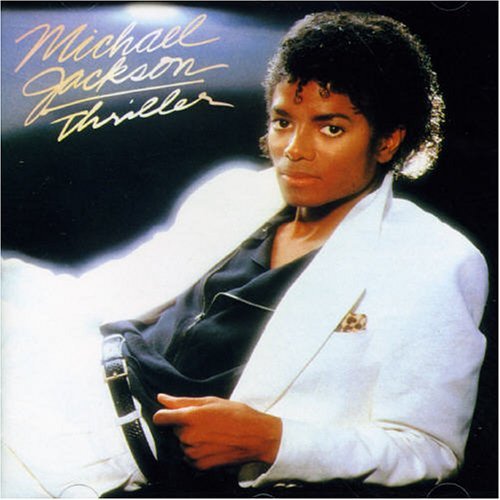
Rest in Peace King of Pop. You made Gary, Ind. (and the world) dance. I got the news walking down the streets of Bucaramanga. Sad day.

Wednesday, June 24, 2009

Something New for the Blog

Alright. I've been getting a little stumped on what I should be writing about, so I've decided to change it up a bit. I'm going to pick a topic and discuss the similarities and differences between how we perceive that topic in the United States and how the people of Colombia view that same topic.

This evenings topic: driving and transit.

Let me start off by saying that I don't drive at the moment. When you live in a city like Chicago that has accessible and well managed public transit, you don't really need a car. And when biking weather comes around, there isn't really even any need for transit.

Also, as many of you know, I tend to get skittish in automobiles, becoming the shotgun or backseat driver that no one wants, critiquing your every move. But enough about me and my misconception about your driving.

Do you think drivers in Chicago and in the United States are bad? You ain't seen nothing yet.

From what I can gather, there really aren't things like lane lines or passing zones here in Colombia: you drive where ever you want to drive as long as it's not on the sidewalks. The only place where lane lines are present are on larger roads, like highways, and much of the time, they are ignored.

You can pass where ever you please as well. If the person in front of you is driving slow and it's angering you then, by all means, pass them whenever you please.

Pedestrians in Colombia DO NOT have the right of way. If a person hops in front of your car while you are driving, feel free to lay on your horn until they jump out of the way or until you hit them, whichever comes first. Bicyclists who ride the streets of Bogota are probably the bravest people you'll ever see because cars tend to ignore them when they are riding in the streets.

Motorcycles are everywhere and their driving lane is where ever their bike is. During rush hours, you'll see motorcycles weaving in and out of cars, buses and even other motorcycles. These motorcyclists have some humongous eggs and so do their passengers because, much of the time, there are two people on a bike.

Taxi drivers are just as bad as taxi drivers in big cities, hustling from fare to fare without a concern for anyone.

The streets of Bogota are confusing as well. During rush hours, some streets (a few of the major causeways) change from two way streets into one way streets. So, between the hours of 6am and 9am, a street will only be used to travel in on direction. After that time, the streets return to two way traffic. Once again, from 5pm to 8pm, the same streets will change into one way streets, only in the opposite direction. The logic behind this is that it relieves congestion, which I assume it does, although it's very confusing and, had I been driving this evening, I may have just started driving the wrong down what I assumed was a two way street.

Where's the police and traffic control people in Bogota? Nowhere. They have more important things to deal with. Sometimes though, when you leave the capital city, they will randomly stop you on your way back into the city to make sure your car is up to code.

Transit, on the other hand, is an entity all it's own.

There are no trains in the city of Bogota but there is an extensive bus system that much of the population of the city uses. I would too because gas (super, which is equivalent to regular grade in the United States) costs $4+ dollars a gallon.

Buses on the major roads are segregated from the rest of traffic with two to three lanes for travel. Stops along the route are stations, much like train stations on Chicago's 'L, where, at times, hundreds of people wait for their bus line to come. During rush hours, stations resemble cattle slaughter house lines with people shoulder to shoulder. I didn't get a chance to ride a bus in Bogota but they looked similar to any other accordion-style bus in any big city, only with double doors on the left and right hand sides. Cost to ride the bus: 1500 pesos or about $.75 a ride. My godfather said the price was so low because people in the city do not make a lot of money.

I'm leaving Bogota in the morning and heading to Bucaramonga, the childhood home of my mother. New topic tomorrow evening.